Affichage des articles dont le libellé est Beautiful Places. Afficher tous les articles
Affichage des articles dont le libellé est Beautiful Places. Afficher tous les articles
Big Island Surfing

Surfing has long been a part of South Pacific culture, especially in Hawaii. Once reserved as a sport only for royalty to enjoy, affluent Hawaiian families would move from their winter locations on the northern shores to their summer getaways in the southern parts of the islands to ride the best waves all through the year. These days the ancients aren't that different from modern day surfers who follow the wave patterns with great care and attention for riding is the ultimate thrill, a fast paced adventure requiring skill and know-how many train a lifetime to acquire.
Big Island Hawaii surfing holds the least appeal in the island chain yet does offer a number of good spots to catch some waves. Upolu boasts black sand Big Island beaches and colossal peaks far down below as waves flow one after another, crashing into the bluffs and peeling back layer by layer. The remote beach has a right hand break and compiles wild northwest, north and northeast swells in the winter months. Surfing Hawaii here is wave riding at its best. When the waves recede to smaller sizes surfers will need some Big Island hiking and climbing experience to get in and out of the water. Guns and shortboards are the best to use at Upolu.
Surfing the Big Island Hawaii at Pinetrees is popular and often called a swell magnet. The beach break and reef is ideal and surrounded by tropical landscape and majestic waves. The beach is a narrow, crescent shaped strip of white sand known for momentous waves when many other spots for surfing Hawaii are flat. Both right and left hand waves come quickly from offshore reefs. Classic peaks are served up, created by the offshore reefs and inclining lava formations that run into the ocean. Surfing the Big Island Hawaii at Pinetrees offers year round breaks best in the west and southwest swells. Though both long and shortboards are recommended but many say longboards are the best ride for Big Island Hawaii surfing at Pinetrees.
Surfing the Big Island Hawaii is also possible at Kahaluu Beach Park in the town of Kailua Kona on the west coast. The area is also one of the best snorkeling spots on the island boasting thousands of schools of tame fish. There are lots of fun things to do in and around the town aside from the beach. At Kailua Pier there are a host of bars, shops and restaurants to explore. Tourists can also arrange excellent Hawaii diving trips through area tour operators. Big Island golfing can be enjoyed at the Makalei Hawaii Country Club rounding out something to do for each member of the family or travel group.
When surfing the Big Island Hawaii at Kahaluu Beach look out for the three tiers of surf sweeping over the lagoons and reefs. The beach is a small and sheltered rugged bay with a dark strip of sand great for taking a breather. For bigger waves head out further. Big Island Hawaii surfing for beginners is best slightly after the snorkeling lagoon. For intermediate surfing Hawaii boarders should head out to the assortment of peaks a little further out where there are more reefs that peel and tube. All breaks are normally full-faced and exciting and very rarely hollow. Both short and longboards are great at Kahaluu Beach.
Wave-hunters are most common in Oahu where some of the most legendary monster waves crash in between October and March and the most accredited of all surfing competitions are held. Waikiki Beach has great surfing for beginners year round. Beginners also take to the water in Kauai with plenty of consistent waves at Poipu Beach on the south coast. Along the southeast coast Kalapaki Beach is a favorite, sitting in a well-protected bay.
Maui comes next on the agenda with many championship surfing competitions held between March and May. When looking to surf Big Island Waipio on the north shore and Papeekeo, north from Hilo along the east shore are good spots. When heading to Hawaii to surf, go north in the winter and spring and head south in the summer months. Different months appeal to different surfing skills yet visitors will luck into waves somewhere around the island almost any time of year.
Big Island Hawaii surfing holds the least appeal in the island chain yet does offer a number of good spots to catch some waves. Upolu boasts black sand Big Island beaches and colossal peaks far down below as waves flow one after another, crashing into the bluffs and peeling back layer by layer. The remote beach has a right hand break and compiles wild northwest, north and northeast swells in the winter months. Surfing Hawaii here is wave riding at its best. When the waves recede to smaller sizes surfers will need some Big Island hiking and climbing experience to get in and out of the water. Guns and shortboards are the best to use at Upolu.
Surfing the Big Island Hawaii at Pinetrees is popular and often called a swell magnet. The beach break and reef is ideal and surrounded by tropical landscape and majestic waves. The beach is a narrow, crescent shaped strip of white sand known for momentous waves when many other spots for surfing Hawaii are flat. Both right and left hand waves come quickly from offshore reefs. Classic peaks are served up, created by the offshore reefs and inclining lava formations that run into the ocean. Surfing the Big Island Hawaii at Pinetrees offers year round breaks best in the west and southwest swells. Though both long and shortboards are recommended but many say longboards are the best ride for Big Island Hawaii surfing at Pinetrees.
Surfing the Big Island Hawaii is also possible at Kahaluu Beach Park in the town of Kailua Kona on the west coast. The area is also one of the best snorkeling spots on the island boasting thousands of schools of tame fish. There are lots of fun things to do in and around the town aside from the beach. At Kailua Pier there are a host of bars, shops and restaurants to explore. Tourists can also arrange excellent Hawaii diving trips through area tour operators. Big Island golfing can be enjoyed at the Makalei Hawaii Country Club rounding out something to do for each member of the family or travel group.
When surfing the Big Island Hawaii at Kahaluu Beach look out for the three tiers of surf sweeping over the lagoons and reefs. The beach is a small and sheltered rugged bay with a dark strip of sand great for taking a breather. For bigger waves head out further. Big Island Hawaii surfing for beginners is best slightly after the snorkeling lagoon. For intermediate surfing Hawaii boarders should head out to the assortment of peaks a little further out where there are more reefs that peel and tube. All breaks are normally full-faced and exciting and very rarely hollow. Both short and longboards are great at Kahaluu Beach.
Wave-hunters are most common in Oahu where some of the most legendary monster waves crash in between October and March and the most accredited of all surfing competitions are held. Waikiki Beach has great surfing for beginners year round. Beginners also take to the water in Kauai with plenty of consistent waves at Poipu Beach on the south coast. Along the southeast coast Kalapaki Beach is a favorite, sitting in a well-protected bay.
Maui comes next on the agenda with many championship surfing competitions held between March and May. When looking to surf Big Island Waipio on the north shore and Papeekeo, north from Hilo along the east shore are good spots. When heading to Hawaii to surf, go north in the winter and spring and head south in the summer months. Different months appeal to different surfing skills yet visitors will luck into waves somewhere around the island almost any time of year.
Bora Bora, French Polynesia

Officially a collectivity of France, the island of Bora Bora lies in the Leeward group of the Society Islands of French Polynesia. With its amazing reef, fantastic white sand beaches, and laid-back local population it is easy to see why Bora Bora is considered by many to be paradise on Earth. The island itself features an extinct volcano in the center and is surrounded by a lagoon and a barrier reef. Bora Bora is a tourist hot-spot and many resorts and over-the-water bungalows have been built on the island. The population of locals is just under 9,000 with Tahitian, French, and some English spoken. Visitors can enjoy world-class diving and snorkeling, as well as sunset catamaran cruises, fishing trips, and jet ski rentals.


Seychelles Islands

The island nation known as the Seychelles can be found in the Indian Ocean off the East coast of Africa, North of Madagascar. There are 115 islands in the archipelago. Seychelles has become a popular tourist destination, thanks to its stunning tropical beaches and interesting wildlife. Popular activities include diving, fishing, sailing, and laying around on amazing white sand beaches. Visitors can find any range of accommodation on the main islands of Praslin, La Digue or Mahé, as well as a variety on outlying islands.


Phi Phi Islands, Thailand

Once a backpacker’s secret, Thailand’s Phi Phi islands exploded onto the tourist map after the release of The Beach
 , a movie starring Leonardo DiCaprio that was filmed on one of the islands. Ko Phi Phi Don and Ko Phi Phi Lee are located between the island of Phuket and mainland Thailand off the West coast of Thailand in the Andaman Sea. Ko Phi Phi Don is the larger of the two islands and is home to permanent residents and a myriad of accommodations for tourists. Ko Phi Phi Lee has spectacular white sand beaches and can be visited by boat only, with trips leaving from the larger island throughout the day. Visitors can enjoy diving, snorkeling and kayaking in the waters off both islands.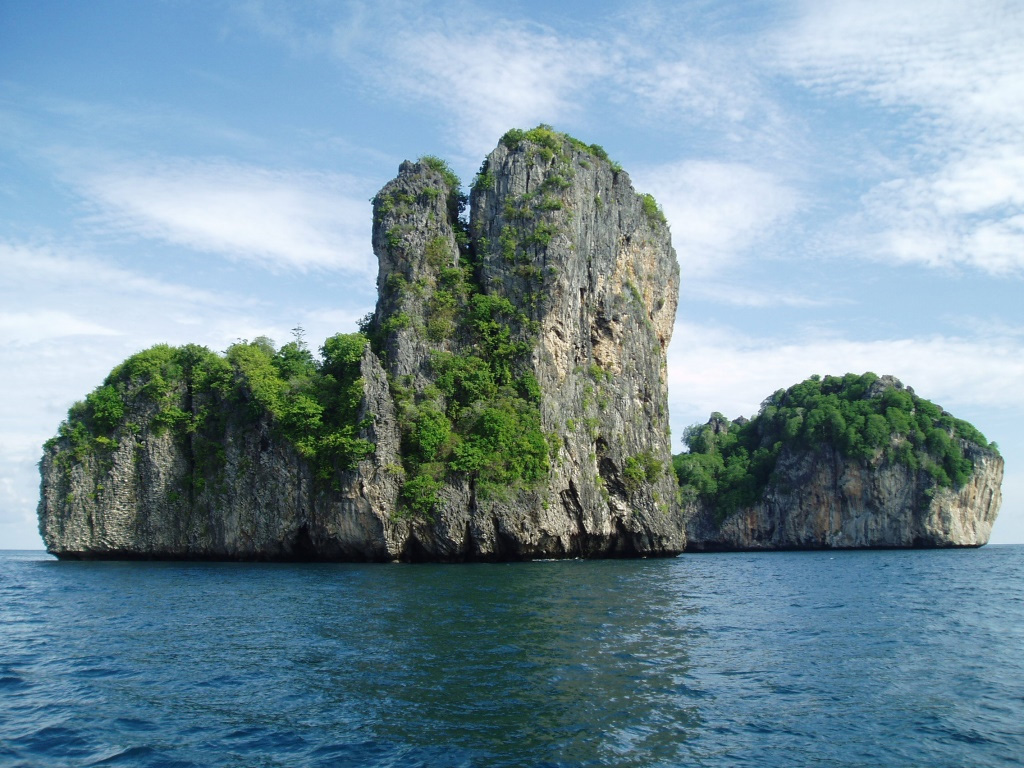


Maldives

Southwest of Sri Lanka in the Laccadive Sea lies a paradise like no other, the island country of the Maldives. The Republic of the Maldives consists of twenty-six atolls in an area spanning 90,000 square kilometers (34,749 square miles). The Maldives are popular for their picture-perfect lush islands ringed by gorgeous white sand beaches. The tiny country is the smallest in Asia both in land mass and population (309,000 people). It also has the lowest high point of any country in the world at 2.3 meters (7 feet 7 inches) and because of this the rising sea level threatens its very existence. All total, the Maldives consists of roughly 1,190 coral islands, only 185 of which are inhabited. The islands were discovered as a tourist destination in the 1970s and today tourism accounts for just under 30% of the country’s GDP. A range of accommodation for any budget can be found on the Maldives, and the country’s capital city of Male is home to an international airport.


Inscription à :
Articles (Atom)