The Top 5 Surfing Destinations in the World
Hawaii
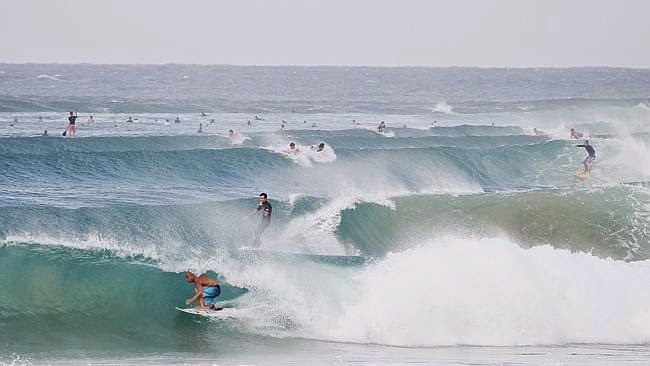
Let’s not pretend that the insane non-stop wave generating elephant isn’t sitting in the corner. Hawaii is the Mecca of surfing, the hallowed center of the wave riding world. Besides being universally recognized as the motherland of our sport, Hawaii has served for decades as the ultimate proving ground for both professional surfers and big wave thrill seekers. With over 800 miles of coastline along its four largest islands (Hawaii, Kauai, Oahu, and Maui) and a temperate climate all year round, it's an obvious attraction for beach goers, but add massive swells from the North Pacific that arrive right on schedule each winter and clean South Pacific waves that glide in each summer, you've got the center of the surfing universe.As far as waves are concerned, the only question you need answered when traveling to Hawaii is when, not if. More importantly, you might want to know, “Will it get too big?” You will get waves in Hawaii, but be careful what you ask for when the buoys hit 25 feet and you find yourself searching for a mellow nook on the opposite side of the island to stay safe from open ocean sneaker sets that will put a gray streak in your hair and a load in your pants. There is nowhere in the world like Hawaii for a surfer.
Indonesia
Since the 60’s, Indonesia has been a target for Australians surfers. But with some 1,700 islands and a wide open swell window facing out to the Indian Ocean, Indo’s vast reef network, warm tropical climate, and rich local culture have enticed several generations of surfers to explore ever deeper and ever farther out to the surfing frontiers of the region. Bali, Java, G-Land, and Sumatra and the Mentawais have all become synonymous with magazine spreads and epic boat trips that make for the wettest of all surf dreams.It’s a pretty expensive and extensive trip for most surfers (Aussies have it a bit easier than most), but the surf makes the travel factor all worthwhile. The waves in indo can get big, but an average day can accommodate intermediate surfers as well. Crowds have become a factor in recent years, but surf forecasting and unimaginable Google mapping of the region have given surfers many options for exploring new wave fields.
Maldives
As a surf destination, the islands and atolls of the Maldives were discovered by a couple wayward Aussies on their way to Africa. The waves are perfect, the islands are remote, and the possibilities are endless. Billed as mellow perfection for intermediate surfers, the main waves can get populated by ever growing surf resort and charter companies, but the vast field of play includes some 1200 islands and 26 atolls that offer even the moderately inspired surfer to go one better and find a little slice of solitude.Tahiti
The island of Tahiti is a paradise. And I don’t use that term loosely. A sub-tropical swell magnet packed full of reef passes and shallow slabs that offer serious barrels for serious surfers. While there are some novice nooks available, the bulk of Tahiti’s allure comes from heavy South Pacific drainers like Teahupoo. For traveling surfers, Tahiti is expensive, but the culture and surf more than make up for the prices. From October to March, you can expect small but consistent waves, but the South Pacific lights up from April to September.Australia
Australia has become the world’s most powerful force in surfing. A land once ruled by its aboriginal population and seen as a haven for criminals and pirates, the continent is perfectly suited for wave riding as its location places it square in the path of the planet’s most powerful and consistent surf energy.A rich and storied surf history and world class waves have cultivated a veritable surf star breeding ground. Lineups run deep with talent and the waves are relentless. A laundry list of classic waves like Snapper Rocks, Kirra, Margaret River, Bells Beach, Lennox head, and …the list is almost endless (if that’s possible).
6 Life Lessons You Can Learn From Surfing

Sometimes I'm surprised I wasn't born with gills.
My life in the water started when I was 13 and joined my high school's water polo team. I sucked, but fell in love. I got better and ended up playing competitively through college.
When I graduated, I wasn't ready to give up the water yet and joined a masters swim team. I swam regularly through medical school, even setting a couple of records in competitions.
So when I discovered surfing... well, needless to say, I was in awe. Yes, it was fun to play around in a pool, but to be in the ocean? To feel the rhythm of the waves underneath me? To splash around with dolphins and seals (and luckily for me, no sharks so far)? You can't beat it.
Surfing is not just a sport, it's a perspective. It's a way of life. Yes, that sounds dramatic, but hear me out. Surfing can teach you life lessons you won't learn anywhere else. Let me share a few with you.
1. There's plenty of room at the top.
Los Angeles is crowded. There are almost 10 million people within its county limits. On your typical sunny weekend day when the waves are decent, the water is congested with hundreds of little black dots, each trying to carve out his or her own little corner of the ocean.
For months, the crowds intimidated me so much that I wouldn't even go out. I felt insecure about my own abilities. I didn't think I belonged out there. I'd wait until it was rainy or the water was choppy and go out when no other decent surfer would bother. If the waves looked good? Forget it. I'd be at home.
But then, as I spent more time in the water, I realized that of all those hundreds of bodies out there, only a small handful were actually going for the waves. The rest were just sitting around, hanging out. I had spent all this time being intimidated by "competition" that didn't even exist.
Now when I go out, I don't care if I see a thousand bodies out there. I know there are enough waves for all of us who really want them.
Do you feel a burning desire to write? To create art? To build a business? Do you feel held back all the other people you see who you think are so much better at it than you? Do you worry that the marketplace is too crowded?
Please, don't be. There are not as many people at the top as you think. There is room for you up there, too, if you're willing to do the work it takes to get there.
2. It's not about any one huge effort -- it's about focused, consistent work over time.
Have you ever heard the expression that to be a writer, you need "butt-in-chair" time? Well the same is true for surfing. You need "body-in-water" time.
My friend James Clear calls this your average daily speed. It's not so important how much you do in a burst of inspiration. It's about how much you do day after day, when you just want to give up and go home.
For the entire first six months I surfed, I didn't catch a single wave. The next six months, I caught a few.
Most of the hours and hours I spent in the ocean were passed paddling around, falling, getting beaten up and jealously watching all the other surfers who seemed to know what they were doing a lot better than I did. Then I'd go home, tired and frustrated.
But this was not time wasted. This was when I learned how waves worked, where to look, where to sit on my board, how to position myself, when I should move in because the tide was changing, when I should move out because a big set was coming from outside.
One day, all of the sudden, I started catching waves. I didn't even know what I was doing differently. I was just moving on instinct.
Put in your time. The results will come.
3. Bide your time, and strike when the iron is hot.
First, a little background on wave science.
Waves don't just roll into the shore one after the other. They come in clusters, or sets. Depending on the weather conditions, the ocean will typically be silent for a while, and then a set of three or four waves will roll in a few seconds apart.
I can always tell the less experienced surfers because they go for the first wave in the set. Believe me, I understand the impulse. We've all been out there, sitting around, waiting for something exciting to happen. So when that first wave comes... bam! Everyone runs after it in a mad dash.
Not me. I watch and wait. I watch as everyone else rushes for the wave. A few catch it, but most don't. And all of those who didn't are now out of position when the second and third waves roll in, which are typically bigger and better formed than the first. That's when I make my move, and get the wave all to myself.
So be patient. Don't get caught in the mad dash. If everyone's running one way, check out to see what's in the other direction.
4. You can tell a professional not by his talent but by his attitude. The same is true of an amateur.
Everyone starts somewhere. Everyone was a beginner once.
Territoriality is for amateurs. Arrogance is for amateurs. Grandiosity is for amateurs. I don't mean "amateur" in the professional sports sense, I mean in the Steven Pressfield Turning Pro sense. You can be the best surfer out there and still be an amateur. You can have a professional contract and still be an amateur.
I once saw a guy surfing who was pretty good, but was a total asshole. He had a longboard, which means you can catch waves earlier than other people can, and was stealing all the waves without respecting the lineup. He was yelling at anyone who he thought was getting in his way. He was grabbing people's leashes to pull them out of the waves so he could cut in.
You know what? That guy had some skills, but in five years he's still going to be putting around, stealing waves and pulling leashes. He's never going to get any better than he is now.
So in whatever you're trying to do, be a pro. Show up. Do your work. Help others who don't know as much as you. Be helped by people know know more. If you find yourself getting arrogant, check it.
5. Most people are rooting for you, not trying to compete with you.
Yes, every once in a while you come across a surfer with a stick up his ass (see above), but more often than not, I'm blown away by the generosity of the surfing community.
I've paddled out to the ocean alone and swam back with new friends. I've had total strangers take me under their wing and show me the ropes for the few hours we found ourselves in the same waves, for no other reason than they had the expertise and saw I could use it.
Those of us who love this sport -- we root for each other. We congratulate each other for good rides. We take turns. We see a good wave coming and say, "You go right, I'll go left." We share. We want each other to succeed.
Too many people operate under the delusion of competition, when the most helpful stance is collaboration. Don't make the mistake of getting competitive when other people just want to help you. Don't be the jerk who's pushing others out of the way when those people would freely give the way to you.
6. There's no point fighting forces of nature.
The ocean doesn't care about you. It is a force of nature that existed long before you were born and that will be around long after you turn to dust.
It doesn't care if you have a good day surfing or a bad day. It doesn't care if it scares you. It doesn't care if it kills you.
When a big wave knocks me over and holds me underwater, it wouldn't make much sense for me to get mad at it, right? But really, we operate that way all the time, fighting forces of life that are as unavoidable as the strength and immensity of the ocean.
We fight that we have pain, get sick, get old, die. We fight that relationships end. We fight to string happy moment after happy moment, as if we could prevent anything bad from happening in between.
Why do we do this to ourselves? It's a waste of time, and a waste of energy. We operate under the illusion of control when so many of the most important things in life aren't even close to the realm of our control. But this doesn't have to be a terrifying concept.
When you release yourself from the illusion of control, you can relax. You can put in your best effort but let things turn out how they'll turn out. You can find moments of joy in the most simple things.
So don't fight forces of nature. Ride them.
SOURCE
5 Unexpected Surf Destinations For The Adventurous Shredder
Not all surf trips are sand, sunshine and small islands. Die-hard surfers will shred anywhere there's flowing water and a decent wave -- even if that means braving below-freezing temperatures or fighting the upstream current of a river.
In fact, some of the world's best surf spots force adventurers past icebergs or through war-stricken deserts just for the thrill of a perfect peeling wave. And we don't blame them. After all, not all surfers are on a strict sun and beach diet.
Case and point? Check out the below 5 off-the-grid destinations:
1. Yakutat, Alaska

Once you get there -- if you can handle the temperatures -- it is so worth it. Chilling breezes and even colder water keeps the lineups empty. When in you're in town, don't forget to visit Alaska's first (and the town's only) surf shop, Icy Waves.
2. Gaza Strip

Getting to the Gaza Strip is a journey of its own. Security around the border is extremely tight with no shortage of barbed wire fences, walls and roadblocks to monitor your every move. If you add this destination to your surfing bucket list, take note: visiting the Gaza Strip is difficult and can be very dangerous and most countries advise against it.
3. Qiantang River, China a.k.a. The Silver Dragon


The most beautiful surfing beaches in the world

They've been widely photographed for its natural beauties and crystal-clear waters, but they also share one thing in common. Surfers can ride waves there, too.
Pristine white sands, vibrant transparent waters, stunning weather, breathtaking surroundings and heavenly ocean views. Meet the 100 most amazing beaches in the world, where swells reach to deliver surfable waves.
These are not the best surf spots in the world. We've traveled the planet to discover the best of two worlds - surf and allure, waves and sights. Paradise is just around the corner.
If you're planning the ultimate family holiday experience, browse through our list and get ready to travel. They'll be suprised and you'll get your share of waves.
From the cold waters of Norway and Tasmania, to the warm waters of Brazil and Tahiti, there's an idyllic world of beaches to explore. Feel the soul-warming sun, contemplate the clear blue skies, taste the exotic smells of the Earth's most beautiful surfing beaches. Enjoy life.


| EUROPE Arrifana, Aljezur, Portugal Biarritz, France Bundoran Beach, Ireland Carrapateira, Portugal Civitavecchia, Lazio, Italy Désert des Agriates, Corsica, France El Golfo, Lanzarote, Spain Guincho, Portugal L'Ancress Bay, Guernsey, Channel Islands Les Cavaliers, Anglet, France Levanto, Italy Morro Jable, Fuerteventura, Spain Mundaka, Spain Oostduinkerke, Koksijde, Belgium Pantin, Ferrol, Spain Plage d'Hossegor, Soorts-Hossegor, France Playa de la Barceloneta, Barcelona, Spain Playa del Inglés, Las Palmas, Spain Porto Santo, Madeira, Portugal Praia do Norte, Nazaré, Portugal Ribeira d'Ilhas, Ericeira, Portugal Rømø, Tønder, Denmark Santa Bárbara, Azores, Portugal Seilebost Beach, Outer Hebrides, Scotland Spiekeroog, East Frisian Islands, Germany St. Peter-Ording, Schleswig-Holstein, Germany Tarifa, Cadiz, Spain Utakleiv, Lofoten, Norway Watergate Bay, Cornwall, England Zandvoort, Netherlands Zavial, Portugal OCEANIA Bells Beach, Torquay, Australia Bondi Beach, Sydney, Australia Byron Bay, New South Wales, Australia Crescent Head, Tasmania, Australia Esperance, Goldfields-Esperance, Australia Kirra Beach, Coolangatta, Australia Margaret River, Australia Ninety Mile Beach, Northland, New Zealand Ocean Beach, Denmark, Australia Piha Beach, New Zealand Surfers Paradise, Queensland, Australia Tavarua, Fiji Teahupoo, Tahiti, French Polynesia Tuncurry Beach, New South Wales, Australia CARIBBEAN Bathsheba, Barbados Boston Beach, Jamaica Governor's Harbour, Eleuthera, Bahamas Maracas Bay, Trinidad & Tobago Mayreau, St. Vincent & The Grenadines Playa Grande, Rio San Juan, Dominican Republic Rincon, Puerto Rico Southampton, Bermudas |
The Best Hotels For Surfing Vacations

Four Seasons Resort Maui at Wailea, Maui
Four Seasons Resort Maui at Wailea’s white sand beaches beckon surfers to test the waters, and when you’re done, there’s plenty else to do. The Five-Star resort has lively pools and bars, plus activities from croquet to Pilates.
Long Beach Lodge Resort, Tofino, British Columbia

Round House, Bathsheba, Barbados
Built in the early 1800s, the colonial-style main house overlooks a white sand beach studded with natural tidal pools. The four-room Barbados inn also provides surfing lessons and on-site equipment rental for its guests.Round House is just a 200-yard walk down the sand from Barbado's famous Soup Bowl, a break that gets crowded with locals and famous surfers (such as icon Kelly Slater) during high swells. Beginners can hit it during smaller waves, or stick to Cattlewash, a mellow sand bar break just steps from the resort.

The Ritz-Carlton, Laguna Niguel, Calif.
This Mediterranean-style Four-Star resort sits 150 feet above Salt Creek Beach, on a bluff overlooking the ocean. The Ritz-Carlton, Laguna Niguel staff will set you up with equipment, wetsuits and customized lessons on stand-up paddleboards or surfboardsFind a mix of waves among the breaks at Salt Creek Beach, or head to the formerly experts-only Doheny point break, which has mellowed to a great spot for intermediate surfers. Outdoor fireplaces on your room's private patio offer relaxation after your day on the waves.

The Grand Del Mar, San Diego
This Five-Star resort is another reason to visit the beautiful beaches of San Diego, especially if Five-Star spa service is your idea of a perfect follow-up to a workout on the water. The hotel arranges private and group surf lessons—plus equipment rental—for everyone from kids to experts.Surfers can explore the rugged breaks of nearby towns such as La Jolla and Rancho Santa Fe.

Turtle Bay Resort, Oahu, Hawaii
This Hawaii resort tries to channel the spirit of the "Waterman," a Polynesian tradition that includes the skills of surfing, paddling and rowing—they offer instruction covering all three. Hundreds of beach cottages and suites overlooking the breaks make this beachfront resort on Oahu's North Shore worth a visit.Located right on the "seven-mile miracle," a famous stretch of surfing waters on Oahu's North Shore, Turtle Bay Resort has the Hans Hedemann Surf Center right next to the hotel lobby. Schedule lessons for surfing and stand-up paddling for all abilities, including multi-day packages that take advantage of nearby breaks.

The St. Regis Monarch Beach, Dana Point, Calif.
This Five-Star Dana Point resort offers luxurious rooms, of course, but you can also find a variety of wave-riding instruction, including surf packages complete with equipment. Head into the waves from the resort's private oceanfront beach club, the Monarch Bay Club.The St. Regis Monarch Beach is right off Salt Creek Beach Park in Dana Point, where surfers can find three or four different breaks along a single stretch of coastline. Surf the Middles break or go a little further north for intermediate-level Gravels.

Cabo Surf Hotel, Los Cabos, Mexico
This Spanish-style Los Cabos beach resort has only 22 rooms, including small villas with kitchens, private terraces and Jacuzzis. It's located directly on white-sand Playa Acapulquito and has an on-site surf shop that offers lessons using beginner soft boards as well as long boards and stand-up paddleboardsCabo Surf Hotel is located on two popular surf spots, including approachable Old Man's break and rocky La Roca, a reef break for more skilled surfers. Experts can also head 100 yards down the shore to Zippers, a famous break that draws locals and tourists alike.
10 signs your surf addiction is taking over your life.

Surf addiction is a strange phenomenon, what started as a hobby has somewhat taken over your life.
You think all you need is one day of good waves. You get out of Manila, take a break from your regular grind, head down to one of our surfing paradises for a few days and think that will make it all better?
The thing is that is doesn’t, long after the stoke sets in, when it’s time to leave – 15 minutes into the drive home you’re already missing the beach and of course the people that you find there, and are already dreaming of your next escape. Within 2 days you have withdrawal symptoms and eventually you cry on social media with sincerity with how you would rather be back at the beach and if you get really desperate like me, you start a small business or start saving money with hopes of one day spending the rest of your days at the beach.
Here’s 10 ways to know if surfing is taking over your life. How many can you tick off?
1. When ever any one asks you what you’ve been up to? The one you talk about with most pride is surfing or surf related.
2. It has taken your identity. All your social media display pictures or bio has something “surf” related.
3. You can’t imagine dating a non-surfer. Or your girlfriend or boyfriend is a surfer.
4. You see your friends at the beach more than you do in Manila (For Manilenos)
5. You refuse to work a regular desk job or you start a surf related business in the hope that someday it takes off and you’ll spend the rest of your days by the beach.
6. You spend all your money surfing, you know you should save more but who cares.
7. You stopped spending Sundays with the family.
8. You wish you had more money for different boards.
9. You can’t imagine spending money on a trip/travel non surf related.
10. You can’t remember what life was like before you surfed.
The good news is there is no cure
Happy surfing this weekend.
If you enjoyed this article please share.
Yours truly,
Gerard.
Top 10 Surf Books
Thanks to the dedicated work of a few intrepid surfers and eloquent wave enthusiasts, there are few rare surfing reads worth searching for.
Here’s my top ten surf book discoveries:
1. Breath by Tim Winton

As a kid, Pikelet and his best mate ‘Loonie’ would scare onlookers by seeing who could hold their breath underwater the longest. As a teen, the thrill of big wave riding caused a few heavy hold downs. And asphyxiation, resuscitation and didgeridoos all played their part in Pikelet’s adult life.
With experience and emotion drawn from the West Oz ocean, Tim Winton has conjured mythical waves for all to enjoy in Breath. From the fun peelers at The Point to the mind-blowing gut-wrenching Nautilus, there’s something for every surfer to soak up.

2. Dogs of Winter by Kem Nunn

Kem Nunn writes surf fiction with a dark side, and Dogs of Winter is no exception. Terrible deaths, forbidden waves, local legends, crazed surfers and a washed up photographer, all stirred together in a remote Californian Indian reservation.
If you haven’t read a Kem Nunn book, do yourself a favour and order one. Now. Go on then.
3. The Dawn Patrol by Don Winslow

Boone Daniels is a P.I. in boardshorts based in San Diego. He’s a talented sleuth by trade but a devoted surfer by nature. Just as a once-in-a-lifetime swell is predicted to hit, so does a complicated case that Boone is compelled to take.
Dead strippers, Hawaiian gangs and trafficked Mexican girls, cause the case to take a dark and unpredicted course. Boone gets sucked into an emotional whirlpool, from which only his Dawn Patrol buddies can rescue him.
Will Boone catch the baddies and ride the giant swell, or will the case and his life get sucked into an eternal darkness?
4. In Search of Captain Zero: A Surfer’s Road Trip Beyond the End of the Road by Allan Weisbecker

It’s hard to believe but In Search of Captain Zero is actually a memoir not a work of fiction. As Allan Weisbecker nostalgically recalls his drug smuggling mishaps, Mexican misadventure and a melancholy mission to find his old best buddy ‘Captain Zero’.
From the safe haven of his seaside home in New York to the lawless limits of Central America. Weisbecker’s journey is packed full of deep thoughts, remote waves, colourful characters, and travelling challenges.
His mission is to find long lost friend and fellow surfer Christopher Conner AKA Captain Zero. He fears Chris has ‘gone off the rails’. Considering the extraordinary lifestyles they lead together during the ‘good times’ this could be bad, possibly fatal. Hope is all Weisbecker has to go on.
A true tale, of true surfers living exotic surfing lifestyles, but all good stories come to an end.
5. God Clobbers Us All by Poe Ballantine

Edgar Donahoe is an 18 yr old surfing fanatic and an orderly in a decrepit San Diego rest home during the 70s. Like every teenager, Edgar struggles with romance, death, friendship, and an ill-advised affair with the wife of a maladjusted war veteran.
But things start to get really interesting when Edgar and his best friend Pat, a Blackfoot Indian, are held responsible for the disappearance of their fellow worker, Beverley Fey, after an LSD party gone awry.
Ballantine delivers intelligently crafted prose, but his words are easily consumed and very moreish.
6. Amazing Surf Stories: Tales of Incredible Waves and Remarkable Riders by Alex Wade

Before I read this I thought Garrett McNamara surfing giant waves from crumbling glaciers was a hoax, and had no idea that ‘Kelly’ isn’t Slater’s real first name.
I was expecting more ‘story’ if I’m honest, as all of these little surf gems are told in Alex Wade’s concise columnist style. But what I first thought a fault later became a strength, as each tale is quickly read, easily remembered and joyfully recounted.
Amazing surf stories has given me more tales to tell with surfer friends than any other book.
7. The Wavewatchers’ Companion by Gavin Pretor-Pinney

However throw in hand picked quotes, heartfelt observations, simple diagrams and magical metaphors, and wave science becomes wave wonder.
This fascinating, funny book will not teach you how to ride waves, but it will show you how to tune into the shapes, colours and forms of life’s many undulations.
8. Fear Nothing by Dean Koontz

So Chris is a creature of the night – roaming freely through the town on his bike, surfing in the moonlight, exploring while most people sleep.
Already weird enough to capture most peoples attention but the next 24hrs get freaky with mutant monkeys, bodysnatchers, murders and his father’s dying words ‘fear nothing’.
Not so surf centered as the others, but enough to justify inclusion. If you like Dean Koontz thrillers and surfing, you can’t lose.
9. The Big Drop: Classic Big Wave Surfing Stories by John Long

The book’s focus on the early era of big wave riding during the 1950s and 1960s, demonstrate how times have changed, how far we’ve come in big wave surfing but also how brave and bold the first big wave surfers were.
The Big Drop is an intoxicating concoction of charismatic characters with great names and great legacies, including Jose Angel who shouted at sharks, Ken Bradshaw who rode legendary Log Cabins, and Mark Foo whose life and death will be remembered forever.
If you want to discover where big wave surfing began and what it’s all about, you can’t beat The Big Drop.
10. Surfers Code: 12 Simple Lessons for Riding Through Life by Shaun Tomson

At his zenith Shaun Tomson had won a World Champion title, setup a multi-million dollar surf clothing brand (Insight) and was an inspirational speaker. But then his 15 year old son Mathew died in a tragic accident.
From his considerable experience of life’s ups and downs, Shaun has compiled ‘12 simple lessons for riding through life’ starting with ‘I will never turn my back on the ocean’. Shaun is not a modest man, and rarely misses an opportunity to recount his successes, but that makes his tales of loss more poignant.
His code and lessons will certainly ring true for surfers young and old and are well worth remembering. As he says in his introduction “if a young surfer or anyone for that matter can read Surfers Code, learn some useful information, and ultimately get more enjoyment in and out of the ocean… then it will be the best thing I have ever done”. He may well be right
Other surfing books that have been highly recommended, but I’ve not yet had the pleasure of reading include:
• West of Jesus: Surfing, Science, and the Origins of Belief by Steven Kotler
• Riding the Magic Carpet: A Surfer’s Odyssey to Find the Perfect Wave by Tom Anderson
• Saltwater Buddha: A Surfers Quest to Find Zen on the Sea by Jaimal Yogis
• Kook: What Surfing Taught Me about Love, Life, and Catching the Perfect Wave by Peter Heller
And finally if you’re new to surfing or want to learn more about surf spots along the coast of California, Wave Riding by Neil Grunig is well worth a read.
I’m sure there are many more surfing novels to discover, so please send me your suggestions.
10 Indo waves to surf before you die
Indo means a lot of things to a lot of people. For some, it’s simply your best bet of scoring perfect waves. For others, it’s where their mates are going. For others still, it’s simply cheap, warm, exotic and massagey. But whatever your reason to go to Indo, it’s a good one. Coz everyone needs more Indo in their lives. With it being the season n’ that, we sat down and thought about the Ten Best Indo Waves To Surf Before You Die.
Lance’s Right
(HT’S IN AMERICAN BRO)

Frieden/A-Frame
Description:
The wave natural footers would give their left gonad too. A picture perfect six second tube, usually bathed in a golden glow and wrapping into a tranquil bay.
History:
Australian Lance Knight stayed on the island for a weeks in the early ‘90s found the wave, just prior to Martin Daley and the Indies Trader rocking up. When the Mentawais went viral a few years later, Lance’s Right was at the centre of it all.
Death factor:
The end section is not called The Surgeon’s Table for nothing, and above six foot a heavy double up comes into play, but at four to six foot, this is as much fun as Indo tubes get.
Why you must surf it?
How many photos do you need to drool over?
Logistics:
A number of land camps have sprung up, making Lance’s camping look primitive, although you can still stay in homestays with the friendly local villages. The boat trip option is the other way. Crowds exist, but Lance’s Right has a few moods and it’s possible to get early and late sessions to yourself, especially out of peak season.
Performers:
Slater and Dorian have had some epic duels here, but like Maccas, every pro surfer over the last 20 years has scored here. And with such a ridiculously easy tube, even the kooks can come out claiming.
Season/Swell
Peak season, May to October, is the most consistent, but the light winds in the off season can provide epic days. It needs winds from the north, but if it swings, Lance’s Lefts on the other side of the island ain’t bad either.
G-Land

Keramas

Rifles
No Kanduis

Apocalypse

Padang Padang

Hour-long rides anyone?

Nias

Macaronis
